
By Puneeth Raj| March 13, 2026
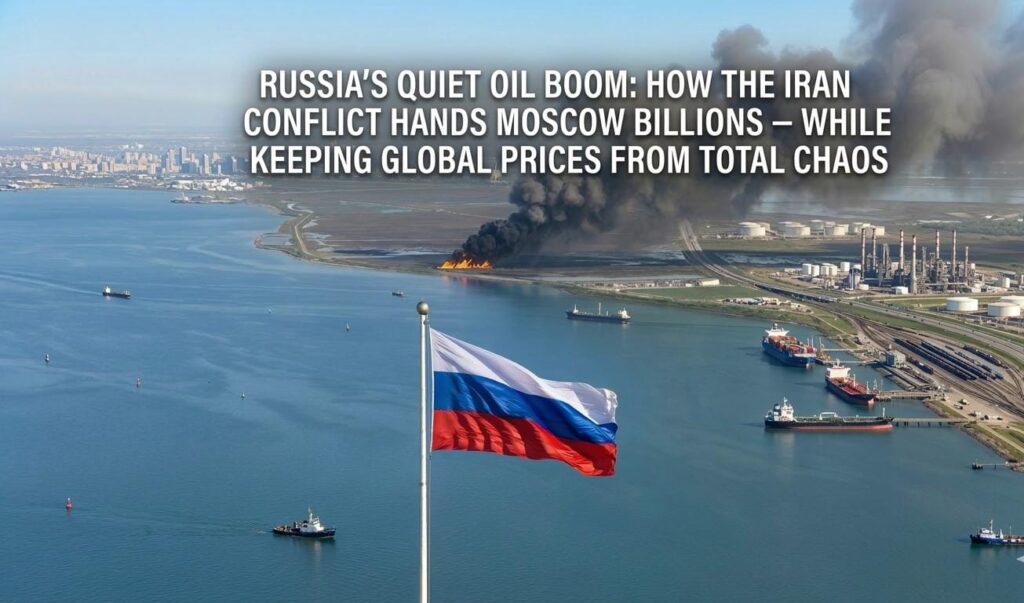
While the world reels from Brent crude spiking to $119 a barrel amid the Strait of Hormuz lockdown and Iran’s oil fields in flames, Russia is quietly banking billions — selling its Urals crude at historic premiums of $4–5 over global benchmarks for the first time ever, thanks to a war it never fought.
On March 13, 2026, Brent crude hovers around $96–100 per barrel after peaking near $119 earlier this month — a direct result of the US-Israel war on Iran that began February 28. The Strait of Hormuz, through which ~20% of global oil flows, faces severe disruptions from attacks on shipping, ports, and infrastructure. The International Energy Agency calls it the largest supply disruption in oil market history, with global supply down ~8 million barrels per day (mbd) in March and Middle East production slashed by at least 10 mbd.
Yet one major exporter is thriving without firing a shot: Russia. Higher prices, erased discounts, revived export volumes, and timely US sanctions relief are delivering a windfall worth billions — while Russia’s increased sales help fill the Iranian gap, preventing even more devastating price spikes for the world.
1. From Deep Discounts to Historic Premiums: The Revenue Surge
Pre-conflict (late February 2026), Russia’s flagship Urals crude traded at heavy discounts of $10–13 per barrel below Brent due to sanctions and the G7 price cap. Export prices dipped to the low $40s/barrel, with February revenues hitting lows not seen since 2022 (IEA data: $9.5 billion total oil/fuel exports, down $1.5 billion from January).
The Iran crisis reversed this overnight:
- Urals prices jumped from ~$45/barrel (Feb 27) to $58–76+ by mid-March, with some Indian deliveries at premiums. This move effectively obliterates Russia’s internal budget target of $59 per barrel, turning a fiscal deficit into a massive surplus.
- In India — Russia’s largest buyer — Urals now sells at a premium of $4–5 per barrel over Brent on delivered basis for March/early April arrivals (first time ever, per Reuters traders, March 6).
- Daily extra revenues: CREA and analyst estimates now suggest Russia is pocketing an extra $550 million daily (a 14–17% boost), potentially totaling tens of billions if the conflict is prolonged.
- Market forces, not manipulation: With Gulf exports crippled, buyers desperately sought alternatives — and Russia’s production and shadow fleet were ready.
2. US Sanctions Relief: Pragmatic U-Turn to Stabilize Markets
To shield consumers and avert shortages, the Trump administration moved fast, pairing these moves with a massive release of 572 million barrels from the Strategic Petroleum Reserve (SPR):
- March 5: 30-day waiver specifically for India to buy already-loaded Russian oil/products (loaded on/before March 5).
- March 12: Broader 30-day general license (through ~April 11) for stranded Russian cargoes worldwide (Treasury/OFAC).
- Treasury Secretary Scott Bessent called it a “stop-gap” to keep oil flowing, clarifying on social media that these are “narrowly tailored” measures to increase the global reach of existing supply. Result: Floating storage (e.g., 132.9 million barrels end-February dropping to ~118 million by mid-March, per Kpler) cleared rapidly. Russia sells higher volumes at premium prices — turning sanctions pressure into opportunity.
3. India’s Fast Pivot: 30 Million Barrels and Counting
Indian refiners (IOC, Reliance, HPCL, BPCL) acted quickest, shifting their non-Hormuz sourcing to nearly 70%:
- Snapped up ~30 million barrels of pre-loaded Russian crude (Urals, ESPO, Varandey) since the waiver — equivalent to a full month’s pre-crisis imports.
- March imports surged from ~1 mbd (February) to 1.5–1.6 mbd in early days (45–50% jump, Times of India/The Print).
- These were rerouted “stranded” tankers in Asian waters, heading to ports like Paradip, Mumbai, Kochi, and the massive refining hub at Jamnagar. Quick delivery offset drops from Iraq (0.6 mbd), Saudi (0.4 mbd), UAE (0.1 mbd).
- India paid more (premiums $2–8 over Brent in some deals, flat to slight premium in others), but avoided refinery shutdowns, shortages, and worse domestic fuel hikes.
4. Global Benefit: Russia as Shock Absorber for “Balanced” Prices
Russia’s gains aren’t just Moscow’s win — they stabilize the world:
- Without extra Russian supply filling ~20–30% of the Iranian/Middle East gap, Brent could have easily hit $120–150+/barrel (recession-triggering levels).
- Ramp-up to India, China, and others restores balance faster than new OPEC+ output.
- US waivers accelerate legal flows, easing panic buying; the “shadow fleet” is now effectively operating in broad daylight with tacit Western blessing.
- Brent eased from $119 peak to ~$96–100 range — painful for consumers but far from catastrophic, acting as an unintentional floor that keeps inflation contained and emerging economies (like India) functional.
Looking Ahead: Temporary Windfall or Sanctions Game-Changer?
This boom is likely short-term — de-escalation and Hormuz reopening could normalize prices/discounts quickly. Russia pushes diplomacy while banking gains.
Yet if disruptions linger or waivers extend (analysts speculate “temporary” relief could become de facto policy), it might reshape norms: Sanctions enforcement softens when domestic fuel stability trumps geopolitics. For importers, it underscores reliance on reliable non-Mideast suppliers like Russia.
In geopolitics’ unpredictable arena, the Iran war has handed Russia billions — and, counterintuitively, helped the world avoid an even worse energy nightmare.