
Written By: Vaishak Kaverappa, March 22, 2026.
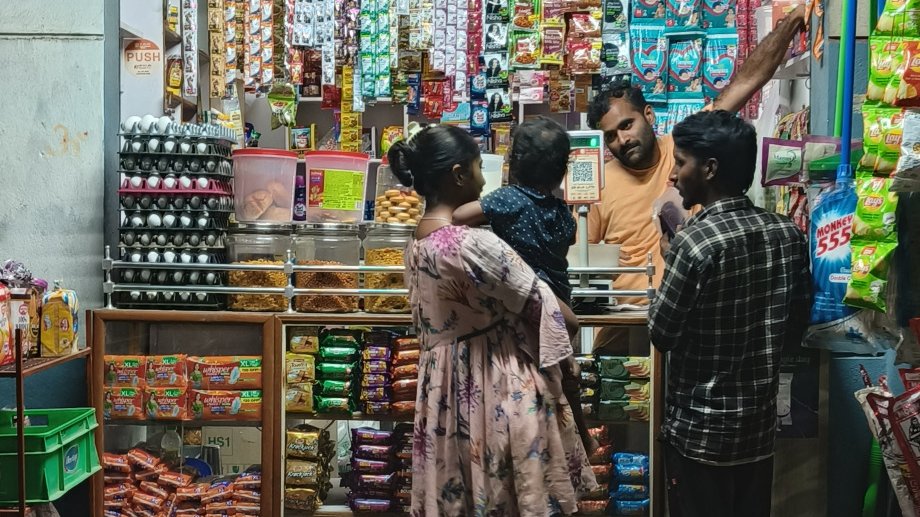
Before online deliveries promised ‘10-minute convenience,’ there was already someone who knew exactly what we needed—sometimes even before we asked. The neighborhood kirana shop wasn’t just a place to buy groceries; it was a place where relationships were built, trust was written in notebooks.
A Walk Down Memory Lane
Think about your childhood for a moment.
Walking to the nearby shop with your parents…Holding a small list written on paper… Looking at jars filled with colorful candies and biscuits…
And that familiar voice from behind the counter:
“Aur kya chahiye?”
There was something special in that moment. Something no supermarket or mobile app has ever been able to replace.
More Than Just a Shop
A kirana shop is not built on offers or discounts.
It is built on trust.
The shopkeeper knows your name.
He knows your monthly groceries.
Sometimes, he even knows your family requirement better than you think.
And then there was that one line we all grew up hearing:
“Baaki mein likh lo.”
No OTP. No payment failure. No stress. Just trust.
A Real-Life Moment We All Know
There was a time when guests suddenly arrived at home.
Your mother would quickly ask you to run to the kirana shop.
You didn’t need to explain much.
And if you didn’t have money at that moment? It didn’t matter.
Because in kirana shops, relationships always came before transactions.
Another Simple but Powerful Memory
Many of us remember buying just ₹5 or ₹10 worth of items.
A small packet of oil.
A handful of toffees.
Or even a single biscuit packet.
No judgment. No minimum order value. Just a smile and a simple exchange.
Today, try doing that on an app.
Why Kirana Shops Still Matter
They are the backbone of our local economy.
They support families, not just businesses.
They bring convenience without losing connection.
And most importantly…
They remind us that not everything in life needs to be fast. Some things are meant to be felt.
UPI Adaptation
And yet, even in this fast-changing world, kirana shops have quietly adapted.
That same shopkeeper who once maintained a small notebook for credit now accepts payments through UPI. A simple QR code hangs near the counter, and transactions happen in seconds. It’s a beautiful blend of old trust and new technology, proving that kirana shops are not stuck in the past; they are learning to survive in the present.
Convenience is growing. Choices are expanding.
And somewhere in between, the role of the humble kirana shop is beginning to change.
But this story doesn’t end here… In Part 2, we explore how supermarkets and 10-minute delivery apps are reshaping this entire ecosystem—and what it means for the future of kirana shops?
When was the last time you visited your local kirana shop? Let us know in the comment box.