Trump Venezuela signals a new era of loud geopolitics and resource control. Discover what’s next and why it matters. Read more.
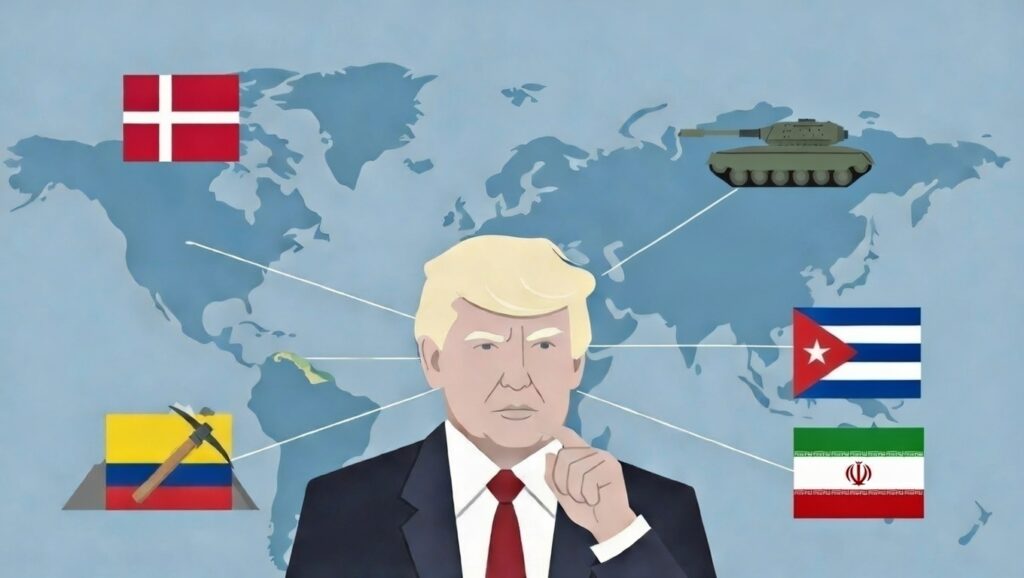
The world is still trying to catch its breath.
In early January 2026, the United States carried out a stunning military operation in Venezuela. President Nicolás Maduro was captured, his government effectively dismantled, and within days President Donald Trump made a statement that shook global politics: the U.S. would temporarily “run Venezuela” during a transition period.
Then came the post that pushed the moment from historic to surreal.
Trump shared a message on social media portraying himself as the temporary president of Venezuela, claiming the role was necessary to stabilize the country, protect its resources, and prepare it for a “real democratic future.” Whether symbolic or serious, the message exploded across newsrooms, parliaments, and dinner-table conversations worldwide.
This was no longer just about Venezuela.
It felt like the opening chapter of a much larger strategy.
Venezuela: Oil, Collapse, and a Power Vacuum
Venezuela is not just another troubled nation. It sits on the largest proven oil reserves on the planet—a fact that has shaped its destiny for decades.
Years of corruption, sanctions, and economic mismanagement turned what should have been national wealth into national ruin. Oil production collapsed. Inflation soared. Millions fled the country.
Trump’s argument is simple and blunt:
Venezuela’s oil was wasted, misused, and exploited by foreign rivals—and the chaos spilled across borders through migration and drug trafficking.
By stepping in, Trump claims the U.S. is:
- Restoring oil infrastructure using American companies
- Preventing rival powers from gaining control
- Using oil revenues to stabilize the country temporarily
His critics see occupation. His supporters see intervention before total collapse.
The truth likely sits somewhere uncomfortably in between.
The Tweet That Changed the Tone
Presidents usually rely on diplomats and formal announcements.
Trump chose a post.
By publicly calling himself the temporary leader of Venezuela, he shattered diplomatic convention. The White House later clarified that the U.S. does not seek permanent control and that Venezuelan leadership will be restored after elections and reforms.
Still, the message mattered.
It told the world this was not a quiet operation.
This was power exercised loudly, deliberately, and unapologetically.
Greenland: Ice, Minerals, and the Future of Power
While Venezuela dominates headlines, Greenland quietly looms in the background.
Beneath its ice lie rare earth minerals—essential for electric vehicles, smartphones, missiles, and clean energy systems. Today, much of the world depends on China for these materials.
Trump has long argued that this dependence is dangerous.
With Arctic ice melting, Greenland is also becoming:
- A strategic military location
- A new shipping corridor
- A frontline in U.S.–China–Russia competition
Greenland and Denmark have firmly rejected any idea of U.S. control, but the pressure has not disappeared. Economic influence, mining partnerships, and security arrangements are now part of a larger Arctic chess game.
Iran: Pressure Without Apology
Iran remains a familiar adversary in Trump’s worldview.
The focus here is not occupation, but maximum pressure:
- Economic isolation
- Sanctions on countries doing business with Iran
- Open support for internal protest movements
Trump’s message is consistent: a nuclear-armed Iran is unacceptable, and diplomacy without leverage is meaningless.
Unlike Venezuela, Iran represents restraint paired with threat—a warning rather than an invasion.
Cuba and Colombia: The Neighborhood Watch
Closer to home, Trump has turned attention toward America’s immediate region.
Cuba faces renewed pressure over migration, drugs, and its political system. Trump frames this as standing up for ordinary Cubans while cutting off destabilizing influence.
Colombia, though a U.S. ally, has been publicly warned over drug trafficking routes feeding America’s fentanyl and cocaine crisis. Cooperation is no longer optional—it is expected.
In Trump’s view, borders are protected not at the fence, but at the source.
A World Reacts—And Worries
Global reactions have been mixed:
- Allies express concern about international law
- Markets respond cautiously but alert
- Many Americans question how far the U.S. should go
Yet supporters argue that hesitation created the world’s current instability—and decisive action is overdue.
The Mantras Take
What is undeniable is that the rules feel different now.
Trump’s post-Venezuela moves reveal a governing philosophy rooted in one clear belief: control over strategic resources and regions equals long-term national security. In his worldview, oil fields, rare earth minerals, shipping routes, and unstable neighbors are not distant concerns but pressure points that determine a nation’s strength. By openly declaring a temporary leadership role in Venezuela, Trump signaled a shift away from cautious diplomacy toward direct, outcome-driven power—where influence is asserted, not negotiated. Supporters see this as overdue realism in a world that no longer plays by old rules, while critics warn it risks normalizing intervention over cooperation; either way, it marks the return of unapologetic, loud geopolitics that prioritizes American interests first and forces the rest of the world to respond, not ignore.
Vry vry informative…