
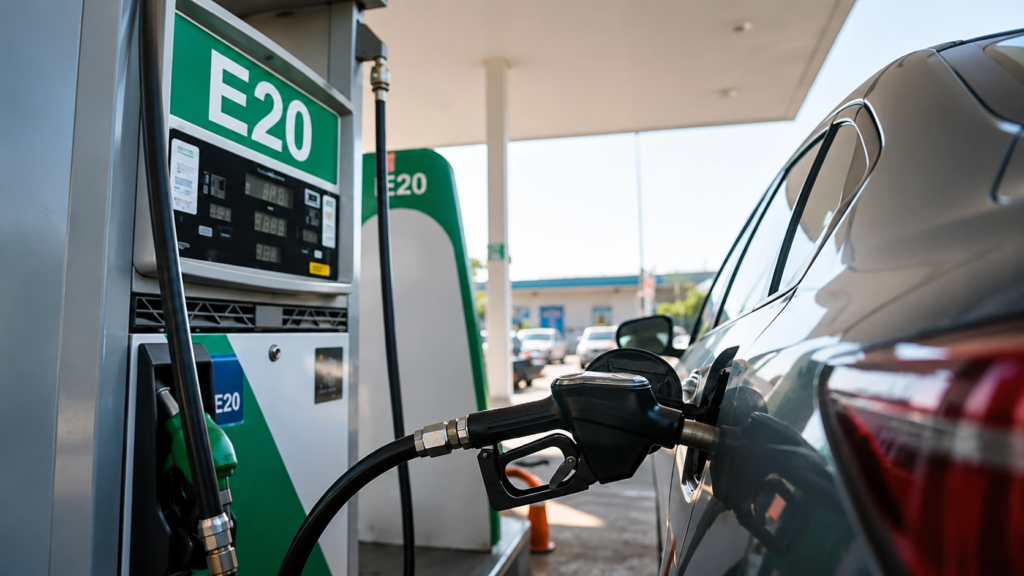
India’s new E20 fuel mandate might be a massive win for the national treasury, but it’s quietly taxing your car’s engine and your wallet.
India made a big change on 1 April 2026. Overnight, every petrol pump in the country started selling only E20 fuel petrol mixed with 20% ethanol. The government calls it a historic step for energy security and farmers. But for millions of car and bike owners, the bigger question is simpler: How much is this actually affecting my vehicle and my pocket?
Here’s a clear, no-nonsense breakdown based on official data, independent tests, and real owner feedback.
Key Highlights at a Glance
- Mileage impact: Most cars see 4–8% lower mileage (roughly 1–2.5 kmpl drop). Lab tests showed 2–6%.
- Turbo vs Normal engines: Both affected, but modern turbo engines can partially offset the loss due to E20’s higher octane.
- Older cars: Higher risk. Pre-2020 vehicles may face faster wear of rubber hoses, seals, and gaskets over time.
- Newer cars: Generally safe. Most BS6 Phase 2 models (2023 onwards) are designed for E20.
- Government claims: ₹1.9+ lakh crore forex saved, major support to farmers, and reduced emissions.
- Reality check: The mileage penalty is real. Engine damage is not widespread in compatible cars, but older vehicles need extra attention.
What Exactly is E20 Fuel?
E20 means 20% ethanol + 80% petrol. Ethanol in India is mainly made from sugarcane and maize. The government fast-tracked the 20% blending target and achieved it in 2025-26 five years ahead of the original 2030 plan.
Since April 2026, all petrol sold in India must be E20 with a minimum RON 95.
Government’s Claims vs Ground Reality
What the government says:
- Saved over ₹1.9 lakh crore in foreign exchange since 2014-15.
- Paid more than ₹1.6 lakh crore directly to farmers.
- Reduced CO₂ emissions by 736–930 lakh metric tonnes.
- Better engine performance due to higher octane.
The Verdict: These benefits are real on a national level.
What car owners are actually feeling:
The most consistent complaint is mileage. While officials describe the drop as “marginal”, many drivers report a clearly noticeable increase in fuel consumption, especially in city traffic and on older vehicles.
Mileage Impact: Turbo vs Naturally Aspirated Engines
Ethanol contains less energy than petrol, which leads to higher fuel consumption.
Naturally Aspirated (NA) Engines
The penalty is usually direct. Some modern, well-calibrated NA cars show smaller drops (around 3–5%). Older NA engines tend to feel the impact more.
Turbocharged Engines
Modern turbo petrol engines can take advantage of E20’s higher octane. This helps reduce knocking under boost and can partially offset the mileage penalty, especially on highways. However, aggressive driving still increases fuel consumption noticeably.
Real-world test data (Autocar India):
- Maruti Dzire (NA): ~3.8% drop
- Skoda Kylaq (1.0 turbo): ~5.5% drop
- Tata Punch (NA): ~8.3% drop
- Hyundai Creta N Line (1.5 turbo): ~12.6% drop
Verdict: Most drivers can expect a real 4–8% drop in mileage. High-mileage users feel it the most.
Who Is Feeling the Impact the Most?
Not everyone is affected equally:
- High-mileage daily commuters — Feel the financial impact of lower mileage the hardest.
- Owners of pre-2020 cars — Face a higher risk of gradual fuel system wear over time.
- Performance-oriented turbo drivers — Notice both the mileage penalty and the smoother performance from higher octane.
- New car owners (2023 onwards) — Mostly affected only by the mileage drop, with very low risk of other issues.
Engine & Part Concerns — Are They Real?
Official testing by ARAI and manufacturers found no widespread engine damage in vehicles designed for E20. Modern cars use better, ethanol-resistant materials.
However, some owners especially of older cars are reporting:
- Rough idling or occasional jerking
- Faster wear of rubber hoses and seals
- Minor fuel smells or leaks after a few months
- Need for earlier replacement of certain fuel system parts
Why older cars are more vulnerable:
Vehicles made before 2020 were not built for high ethanol blends. Ethanol absorbs moisture and can slowly degrade older rubber and plastic components. While it won’t suddenly destroy an engine, long-term wear on the fuel system is a genuine concern in pre-2020 vehicles.
Practical Advice for Car Owners
| Your Car Type | Recommended Action | Expected Impact |
|---|---|---|
| 2023+ BS6 Phase 2 | Normal usage + regular maintenance | Mainly mileage drop |
| 2020–2022 models | Check manufacturer advisory | Mileage + low to medium risk |
| Pre-2020 / Older cars | Get fuel system inspected periodically | Higher long-term risk |
| High daily mileage | Track mileage and service on time | Highest financial impact |
Quick tips:
- Fill from reputed pumps.
- Avoid running the tank very low.
- If you notice new issues after switching to E20, get it checked early.
Frequently Asked Questions
Is E20 safe for bikes and scooters? Newer bikes are generally fine. Very old two-wheelers may face faster wear of fuel hoses and carburetor parts.
Should I use fuel additives? Some owners use ethanol-compatible additives during the transition. Results vary. It’s better to focus on regular servicing.
Will my insurance be affected? The government has clarified that using E20 does not void vehicle insurance. However, damage caused by neglect in incompatible older vehicles could be disputed.
Can I still get E10 petrol somewhere? Currently, E20 is the standard across India. Higher blends may come in the future.
How soon can older cars develop problems? There’s no fixed timeline. Some owners report issues within a few months, while others with well-maintained older cars haven’t faced major problems yet.
Final Verdict
E20 is a strategic move that delivers real benefits at the national level — reduced oil imports, support for farmers, and lower emissions. For modern compatible vehicles, it works reasonably well, with the main downside being a noticeable mileage drop.
For older cars, there is a legitimate long-term risk of faster fuel system wear, even if catastrophic failures are not common.
Bottom line: If you own a relatively new car, adapt to slightly higher running costs and maintain your vehicle properly. If you own an older car, be proactive about monitoring your fuel system. The transition has been smoother than many feared, but it is not completely painless — especially for high-mileage drivers and owners of older vehicles.