
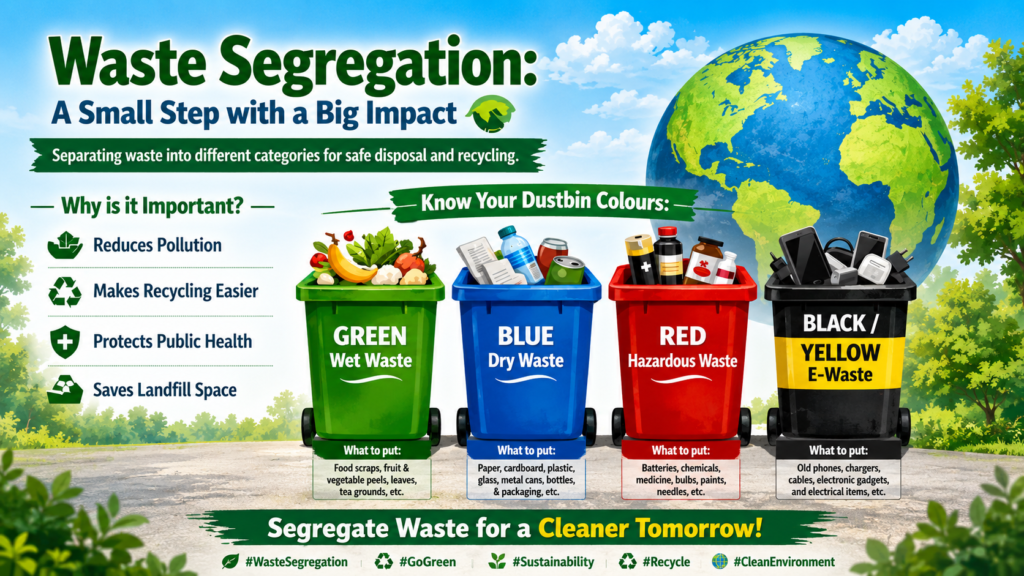
Waste segregation—separating dry and wet waste—is more than just an environmental practice; it’s a transformative approach that benefits both public health and economic well-being. By diligently sorting waste at the source, we create a dual impact: a healthier environment and a source of income for marginalized waste collectors.
First, from a health perspective, improper waste disposal poses a grave risk to informal waste workers. When dry and wet waste are mixed, it becomes a toxic blend. These workers often collect waste with minimal protection, exposing themselves to sharp objects, chemicals, and pathogens. Segregation prevents this risk by ensuring that hazardous or organic waste is kept separate, making it easier—and safer—for them to handle the materials they collect. Thus, segregation acts as a frontline defense in protecting the health of these workers, often overlooked in waste management systems.
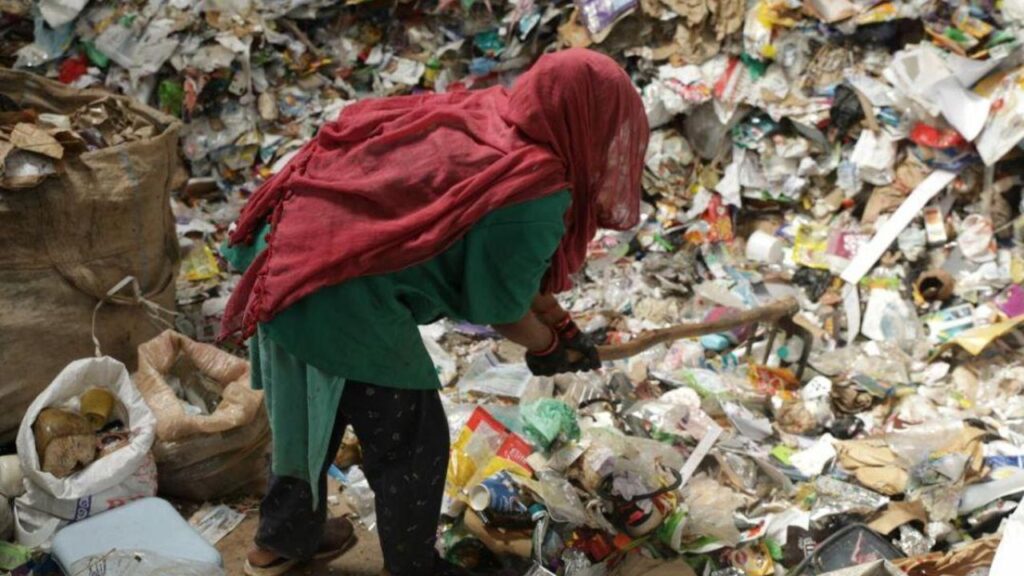
Second, waste segregation is a powerful catalyst for economic opportunity. Informal waste collectors—often a backbone of recycling in many communities—rely on sorted materials. When waste is separated, plastic, paper, and metal can be sold for recycling, turning what was once discarded into a vital income stream. This not only reduces landfill mass but also uplifts entire families who depend on this informal economy. Thus, a simple act of segregation becomes a bridge to financial independence for many overlooked citizens.
Separating waste into dry and wet categories is a small action that brings big benefits for everyone. First, it helps keep waste collectors—often people working with little protection—safe from harm. When dry and wet waste is mixed, it can have sharp objects, chemicals, and germs. These workers often pick up trash by hand, so when waste is separated, it keeps them safer, reducing their chance of getting sick or hurt.
At the same time, separating waste helps people earn money. Many informal waste collectors depend on selling dry waste—like plastic, paper, or metal—to recycling centers. When we sort these materials, they get more value, and collectors can sell them, giving them a way to support their families. Instead of waste being thrown away, it becomes a source of income.
Please, let’s all make this small change: separate your waste at home—dry in one bin, wet in another. By doing this, you protect these workers, keep your neighborhood cleaner, and help create jobs from something we usually just throw away. Together, we can make a real difference—for our health, for the environment, and for each other. Start today—your small step can change someone’s life.
In conclusion, waste segregation is not just a civic duty; it is a lifeline for health and a ladder to economic empowerment. By separating dry and wet waste, we create a ripple effect—reducing environmental harm, safeguarding the health of waste collectors, and opening new income avenues. Let’s adopt this practice and turn every piece of waste into a step toward a healthier, more equitable future.
Đọc xong thấy rất bổ ích. Letco chuyên du học Hàn Quốc, tư vấn 1-1 theo năng lực và ngân sách từng bạn. Ghé thăm letco.vn để được hỗ trợ.