
By Puneeth Raj| March 22, 2026
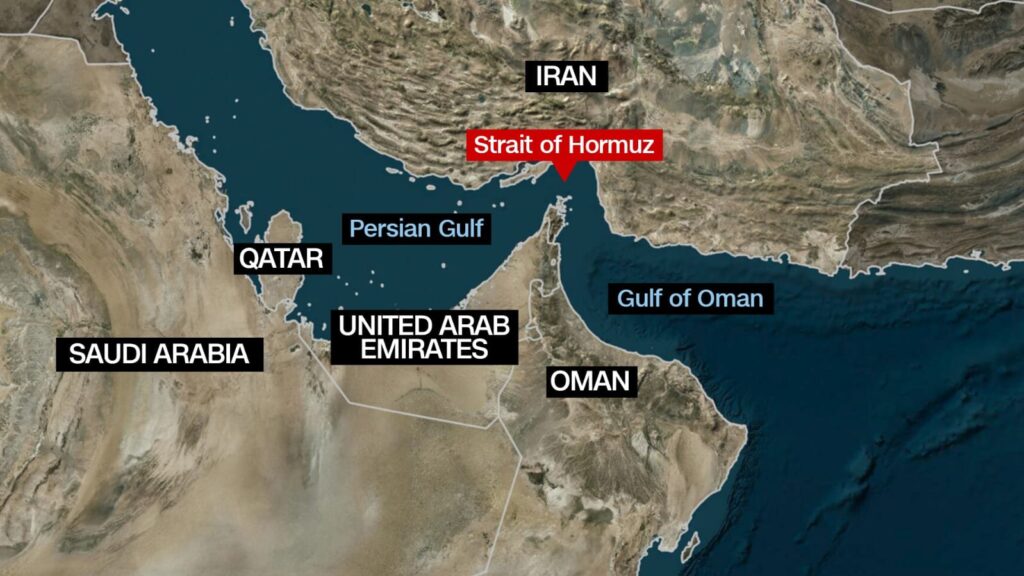
US President Donald Trump has called for a global naval coalition to break the Iranian blockade, but India is proving that a telephone line to Tehran is more effective than a carrier strike group. As 22 Indian-flagged vessels sit in the crosshairs of a global energy apocalypse, the safe passage of the Shivalik and Nanda Devi marks the first major diplomatic crack in the world’s most dangerous chokepoint.
The Strait of Hormuz the narrow 21-mile chokepoint between Iran and Oman remains the world’s most critical energy artery, carrying approximately 20-25% of global oil and 30% of liquefied petroleum gas (LPG). Since the US-Israel-Iran war erupted on February 28, 2026, Iran’s retaliatory restrictions comprising threats, selective attacks, and enforcement have reduced daily transits from over 150 vessels to a trickle of 5-6 on many days. This has stranded hundreds of ships, forced expensive reroutes around Africa, and driven global energy prices sharply higher.
Yet India has carved out a notable exception through sustained, multi-directional diplomacy securing safe passage for several vessels while protecting household cooking gas supplies amid a domestic crisis.
Breakthrough Transits: From Shivalik to the Next Wave
On March 14, two Indian-flagged LPG carriers Shivalik (~54,534 MT, chartered by Indian Oil Corp) and Nanda Devi (~53,503 MT)crossed the strait safely, delivering approximately 92,712 metric tonnes of LPG to Gujarat ports (Mundra, Kandla, and Vadinar arrivals by March 16-17). This cargo provided roughly 1-1.6 days of essential household cooking gas for millions.
Additional successes followed:
- Crude oil tanker Jag Laadki (Adani Ports-linked) docked at Mundra on March 20-21 with ~80,886 MT from the UAE.
- Reports indicate Iranian Navy guidance for at least one LPG transit (pre-approved route, emergency preparations like life rafts ready).
Momentum persists: As of March 21-22, two more Indian-flagged LPG tankers Pine Gas (IOC-operated) and Jag Vasant (BPCL-chartered) remain anchored near Sharjah (UAE) in the Gulf, broadcasting readiness for voyage per MarineTraffic/Kpler data. They could sail soon, following a brief pause after initial transits.
These are rare in a waterway down ~95% in traffic. Iran maintains the strait is “open to all except the US, Israel, and their allies/supporting nations,” granting case-by-case passes to “friendly” or non-aligned states like India, Pakistan (Aframax tanker Karachi transited recently), China (some vessels signaling “CHINA OWNER”), and Turkey. Around 90 vessels have passed since early March mostly Iranian, Indian, Pakistani, or Chinese-linked.
The Diplomatic Backbone
India’s advantage lies in strategic autonomy: deep historical/economic ties with Iran (Chabahar port, civilizational links) alongside strong US, Israel, and Gulf partnerships. External Affairs Minister S. Jaishankar held multiple calls (at least 3-4 since February 28) with Iran’s Foreign Minister Seyed Abbas Araghchi, stressing seafarer safety (~658 Indian crew on Indian-flagged ships; ~23,000 total in Gulf region), energy stability, and non-belligerence.
Jaishankar told the Financial Times: “My talking has yielded some results… If it is yielding results for me, I would naturally continue to look at it.” Iran’s ambassador to India, Mohammad Fathali, publicly confirmed the “rare exception.” No blanket deal exists—each transit is individual—but quiet coordination (humanitarian focus, no official quid pro quo on seized tankers) helped.
The Indian Navy positioned warships in the Gulf of Oman for post-strait escorts, adding security without escalation. India supports the IMO’s March framework for safe evacuation of trapped ships/seafarers.
Scale of the Challenge: 22 Vessels and Rising Stakes
India seeks passage for 22 vessels stranded west of the strait (~20 energy-critical: 4 crude, 6 LPG, 1 LNG, plus containers). Cargo at risk includes approximately 2.15 lakh MT LNG, 3.21 lakh MT LPG, and 16.76 lakh MT crude equivalent to days of national supply.
Domestic Impact: LPG Crisis Hits Kitchens Hard
Gulf supplies meet ~60% of India’s LPG demand (domestic production ~40%); Hormuz blockage halted ~90% of imports, triggering a severe crunch. Daily bookings surged from 5.5 million to 7.6 million by mid-March panic buying amid fears of shortages. Restaurants cut menus, hotels scaled back, food-processing paused, and rationing prioritized households over hospitals and education.
Government actions: ramped refinery production, diverted to domestic use, extended booking lock-in (21 to 25 days), hiked cylinder prices (e.g., ₹60 in Delhi to ₹913), and shifted to US imports (shipments rising). Prolonged disruption risks inflation (>4.5%) and GDP drag (~0.1-0.2% per $10/bbl oil rise). For households across the country, this diplomacy delivers tangible relief.
Lessons for a Polarized World
India’s model dialogue over confrontation proves effective in gray zones. While US-led coalitions risk escalation and global traffic stays crippled, New Delhi’s persistence safeguards energy security.
As Jaishankar noted: “It is better that we reason and we coordinate and get a solution.” With talks ongoing and Pine Gas/Jag Vasant poised to move, this could set a precedent for BRICS-aligned safe-passage norms amid uncertainty. For households across India, this quiet diplomatic win means the stove stays lit—even in turbulent times.