
Success abroad or growth at home? Analyze the structural shifts causing a leaking demographic dividend and how India can retain its brightest minds. Learn how.
Published on: 12/01/2026
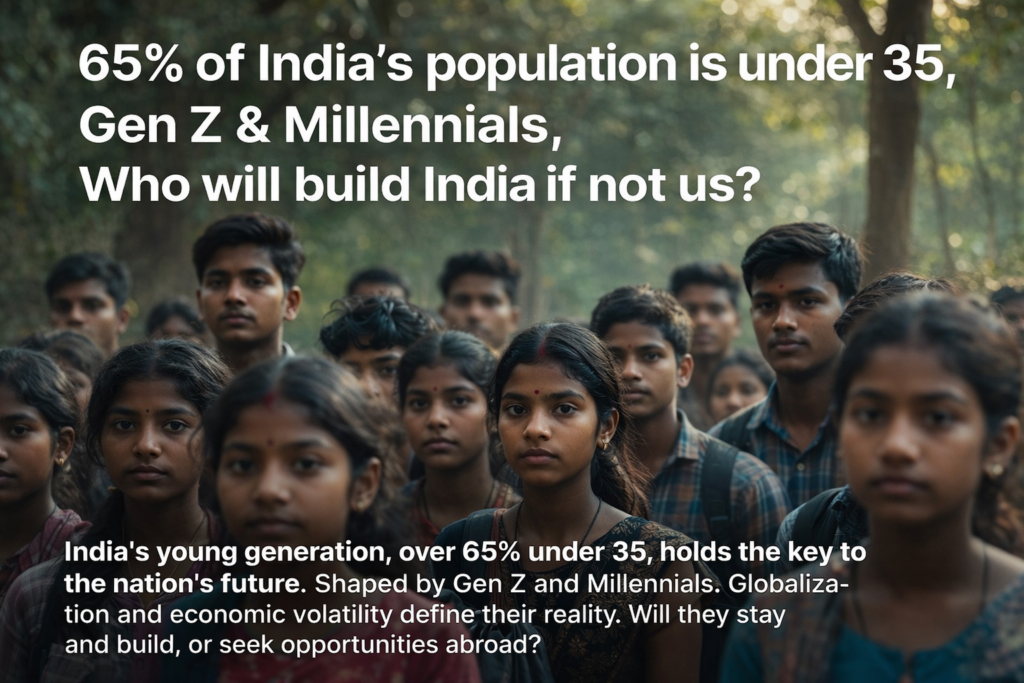
The Youth of Today: Balancing Personal Ambitions with National Loyalty
In today’s fast-paced, globalized world, India’s youth stand at a unique crossroads. With over 65% of the population under 35, the country’s future rests heavily on their shoulders. But there’s a growing trend that makes many pauses: the relentless chase for financial success, sometimes at the cost of staying rooted in their homeland. Opportunities abroad—offering higher salaries, better living standards, and perceived stability—are hard to resist. And yet, this raises a pressing question: If the brightest minds leave, who will stay to build and sustain India?
The desire to succeed is natural. In 2025, young Indians face an uphill battle: unemployment for graduates hovers around 8–10%, inflation eats into savings, and urban living costs often surpass entry-level salaries. Platforms like LinkedIn and Glassdoor highlight global opportunities paying 2–5 times more than local jobs. For example, a software engineer in Bengaluru might earn ₹10–15 lakhs annually, while the same role in Silicon Valley can fetch $100,000+. No wonder brain drain continues—over 1 million Indians emigrated in 2024, many seeking skilled positions abroad. This isn’t simply greed; it’s survival, security, and sometimes the hope of supporting families back home.
Modern youth often see patriotism differently. The 2025 Pew Research report shows that while 70% of Indian youth express pride in their country, only 40% prioritize staying in India over better opportunities abroad. Social media is full of debates like, “Why stay when Canada offers PR and high pay?” Many argue that loyalty doesn’t require physical presence. Remittances from NRIs topped $100 billion in 2025, fueling the nation’s economy. Others contribute digitally—supporting causes from climate action to cultural preservation online. As many echo Thomas Friedman’s words, *“The world is flat”—*why limit yourself to one place when technology allows global impact?
But this detachment carries risks. Who maintains the home front when talent leaves? India’s infrastructure, healthcare, and education systems rely heavily on local expertise. Rural areas, already underserved, suffer most as urban youth migrate. Countries like South Korea and China reversed brain drain by creating domestic opportunities and fostering a sense of patriotism tied to economic growth. Without invested citizens, civic engagement diminishes, corruption can rise, and innovation slows. As one social media post put it, “We’re building other countries while ours crumbles.”
Thankfully, not all youth follow this path. Many choose to stay and innovate—from startups like Zomato and Byju’s to youth activists leading movements like Fridays for Future India. Programs such as Skill India and Atmanirbhar Bharat aim to retain talent by creating opportunities at home. The solution lies in dialogue: how can personal ambition and national contribution coexist? Policies like tax incentives for returnees or support for remote work in India may help bridge this gap.
The Mantra’s Take (As Per Author’s View)
The youth of India aren’t abandoning their country—they’re navigating a complex, interconnected world. Success and national loyalty aren’t mutually exclusive; they can reinforce each other. The mantra is simple yet powerful: “Build yourself, but build India too.” Encourage young minds to dream big, create globally, and contribute locally. Let policies, culture, and opportunity align so that choosing ambition doesn’t mean leaving the nation behind. Because in the end, a stronger India benefits everyone—whether you’re at home or making waves across the globe. The question isn’t “Stay or go?”—it’s “How do we all build together?”