
Visionaries like Bill Gates suggest that smartphones are not disappearing overnight—but they are slowly being replaced by more natural, screen-free technologies powered by artificial intelligence, wearables, and brain-computer interfaces.
Published on: 12/01/2026
For more than a decade, the smartphone has been our constant companion. It wakes us up, connects us to loved ones, entertains us, guides us through unknown roads, manages our money, and even tracks our health. For many of us, life before smartphones now feels distant—almost unimaginable.
But here’s a thought that sounds shocking at first: what if the smartphone is slowly becoming obsolete?
Tech visionaries, including Bill Gates, have hinted that the age of smartphones may be nearing its natural end. Not because phones failed—but because technology itself is evolving into something far more seamless, natural, and human.
Just like landlines gave way to mobile phones, and feature phones gave way to smartphones, the next shift may already be underway.
From Holding Technology to Wearing It
The biggest change ahead is not faster phones or better cameras—it’s where technology lives.
Instead of pulling a device out of our pocket and staring at a screen, future communication tools will blend into our daily lives. They will feel less like gadgets and more like extensions of ourselves.
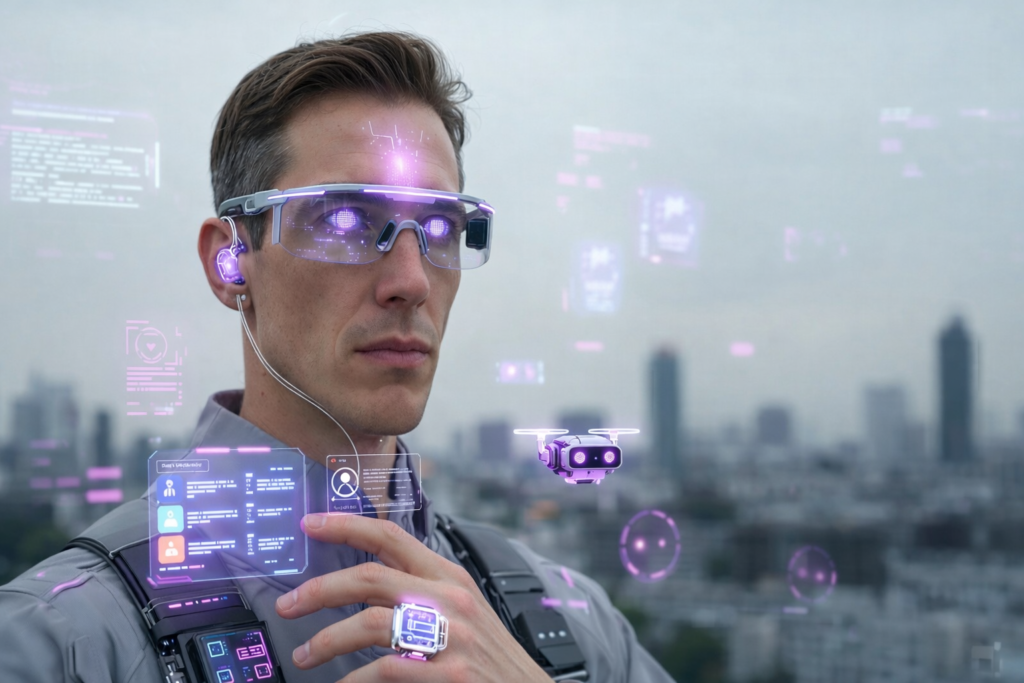
One of the strongest contenders to replace smartphones is Augmented Reality (AR) glasses.
AR Glasses: Information, Right Before Your Eyes
Imagine wearing a pair of normal-looking glasses.
Now imagine those glasses quietly displaying directions as you walk, showing messages while you talk to someone, or letting you take a call without lifting a finger. No screen. No scrolling. No distraction.
That’s the promise of AR glasses.
With simple eye movements, voice commands, or subtle hand gestures, you could:
- Answer calls
- Read messages
- Attend video meetings
- Get real-time navigation
- Monitor your health
Companies like Apple and Meta are already investing heavily in making these glasses lightweight, stylish, and socially acceptable—because no one wants to wear something that feels awkward.
For older generations, this could reduce screen strain. For younger generations, it could feel like second nature.
Beyond Touch: When Thoughts Become Messages
Looking even further ahead, the idea sounds like science fiction—but it’s becoming reality.
Neural interfaces are technologies that connect the human brain directly with computers. Devices like Neuralink aim to make communication faster than speech or typing.
In the future:
- You think of a person, and a message is sent
- You intend to reply, and AI drafts it instantly
- Conversations flow without tapping or speaking
Some versions may be implanted, others worn as headbands or tiny earpieces. AI would quietly assist—filtering noise, prioritizing important conversations, and reducing mental overload.
The biggest benefit? Freedom from constant screens and endless notifications.
Technology That Becomes Invisible
Another fascinating idea is electronic tattoos or smart skin patches.
These ultra-thin devices could stick to your skin like a temporary tattoo and:
- Gently vibrate for alerts
- Light up for notifications
- Display tiny holographic visuals
- Track vital health data
Powered by body heat or movement, they may never need charging. Technology wouldn’t be something you carry—it would simply exist with you.
The Transition Phase: Not Everything Will Change Overnight
Of course, smartphones won’t disappear suddenly.
Before that happens, we’ll likely rely more on:
- Smart earbuds that handle calls and AI assistants
- Smartwatches and rings with gesture-based controls
- Foldable and multi-screen devices as a bridge
These are stepping stones—helping society gradually move beyond traditional screens.
The Challenges We Cannot Ignore
With deeper integration comes deeper responsibility.
Privacy, security, and ethics will be major concerns. Brain-connected devices raise serious questions: Who owns the data? How is it protected? Where do we draw the line?
Adoption will be slow, regulated, and debated—and that’s a good thing.
But history shows us one truth: when technology becomes more useful and more human, it eventually wins acceptance.
The Future Feels Less Like a Device—and More Like Us
The next era of communication isn’t about faster texting or better selfies. It’s about removing friction between humans and technology.
By 2030, the smartphone in your hand may feel as outdated as a flip phone feels today.
And instead of staring down at screens, we may finally look up—more present, more connected, and more human.
The Mantras Take
Technology should not demand our attention—it should earn it quietly.
The smartphone changed the world by putting power in our hands, but the next revolution will come when technology steps out of our hands and into our lives without effort.
The real future of communication is not about devices getting smarter—it’s about humans feeling less distracted, more present, and more connected. When technology becomes invisible and intention-driven, that is when progress truly serves humanity.