
By Puneeth Raj | March 2026
In a seismic strike that has shattered decades of Iranian theocracy, Ayatollah Ali Khamenei—the iron-fisted Supreme Leader who defined the Islamic Republic for 37 years—has been eliminated in a joint US-Israeli airstrike, plunging Iran and the Middle East into uncharted territory.
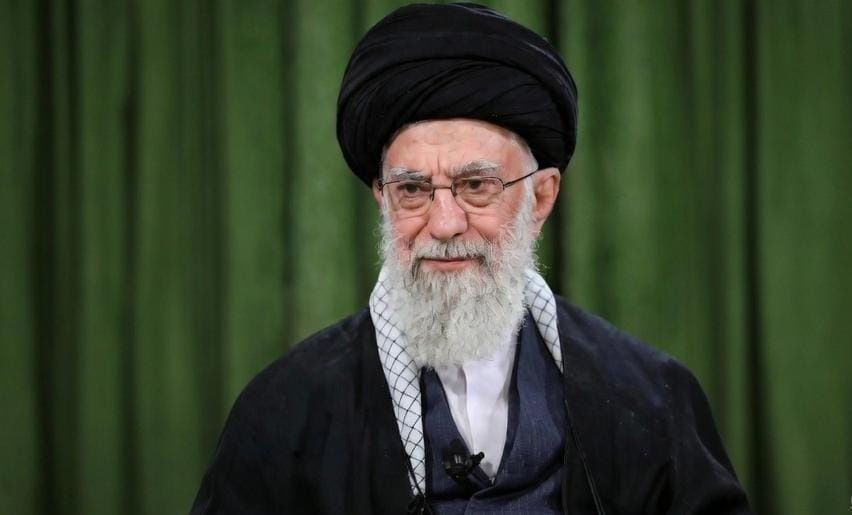
Tehran / Washington / Jerusalem – March 1, 2026 – In one of the most audacious military operations of the 21st century, Ayatollah Ali Khamenei, Iran’s Supreme Leader since 1989, has been confirmed dead at age 86.
Iranian state media (IRIB, Fars, IRNA) announced his “martyrdom” early Sunday, March 1, following a joint US-Israeli airstrike on February 28 (Saturday local time) that targeted his secure office compound in central Tehran. State television anchors appeared visibly shaken—some in tears—as they read the Supreme National Security Council’s statement and declared 40 days of national mourning along with a week of public holidays.
Khamenei wielded absolute authority over Iran’s politics, military, judiciary, and foreign policy for 37 years. His rule was defined by unyielding hostility toward the United States and Israel, sponsorship of the “Axis of Resistance” proxies (Hezbollah, Houthis, Iraqi militias), and a hardline approach to domestic dissent.
The Strike: Operation Epic Fury
The campaign, named Operation Epic Fury by US officials (and Operation Roaring Lion by Israel), featured coordinated precision airstrikes by American and Israeli forces targeting command centers, missile facilities, air defenses, and senior leadership sites across Iran. US President Donald Trump announced Khamenei’s death on Truth Social shortly after the initial wave, describing him as “one of the most evil people in History” and positioning the strikes as a step toward regime pressure, nuclear disarmament, and “peace throughout the Middle East.” Trump stated operations would continue “uninterrupted” for days or weeks, while offering “off-ramps” if Iran de-escalates.
Satellite imagery confirmed significant damage to Khamenei’s Tehran compound. Among the casualties were family members (including a daughter, grandchild, daughter-in-law, and son-in-law), IRGC Commander Major General Mohammad Pakpour, senior advisor Ali Shamkhani, and other high-ranking figures including the Defense Minister and the Army Chief of Staff. Civilian deaths were also reported, including dozens in a strike near a school in Minab, southern Iran. Overall estimates of fatalities range from dozens to hundreds.
The operation represented an unprecedented escalation, moving from years of shadow war, proxy battles, and nuclear brinkmanship into direct, open confrontation.
Succession: Power Vacuum Amid War
Under Iran’s constitution, the Assembly of Experts—an 88-member body of senior Shia clerics—must select a successor “as soon as possible.” Khamenei never publicly designated a successor, and the ongoing conflict severely complicates convening the assembly safely.
A three-member interim council has assumed governance responsibilities: President Masoud Pezeshkian (reformist-leaning), judiciary chief Gholamhossein Mohseni-Eje’i (hardliner), and Ayatollah Alireza Arafi (Guardian Council jurist and senior cleric). Iranian officials confirm the council “has begun its work,” with Arafi designated as the interim Supreme Leader.
Frequently discussed potential successors include:
- Mojtaba Khamenei (56, second-eldest son of the late leader): A reclusive hardliner with deep IRGC connections and behind-the-scenes influence; widely regarded as the de facto heir apparent, though a father-to-son transition risks accusations of dynastic rule.
- Hassan Khomeini (53, grandson of founder Ayatollah Ruhollah Khomeini): Viewed as more moderate and potentially conciliatory.
- Hardline clerics including Sadiq Larijani (former judiciary head), Alireza Arafi, Mohsen Araki, Mohsen Qomi, and Hashem Hosseini Bushehri.
- Khamenei reportedly prepared a shortlist of three unnamed candidates during the 2025 Israel-Iran clashes.
Many analysts note that the strikes may have eliminated or sidelined numerous likely candidates. The Islamic Revolutionary Guard Corps (IRGC)—already empowered by pre-delegated missile-launch authority—is positioned to dominate any transition, potentially through collective leadership, a figurehead cleric, or direct military control. Risks include elite infighting, prolonged uncertainty, or regime fracture if popular unrest surges.
Implications for Iran and the Middle East
For Iran:
- Deepest regime crisis since 1979: A genuine power vacuum with high risk of internal power struggles or IRGC consolidation to preserve control.
- Potential for unrest or uprising: Trump and Netanyahu have openly urged Iranians to “take back” their country; Basij militias are patrolling major cities amid fears of renewed protests, which have already flared in Kashmir and neighboring countries.
- Economic and humanitarian strain: Disrupted infrastructure, panic buying in Tehran, threats to oil and gas exports via the Strait of Hormuz, and reported civilian casualties fueling public anger.
- Nuclear and missile programs: Significant setbacks from targeted strikes, likely setting back capabilities by years, though desperate acceleration or revenge-driven escalation remains possible.
- Leadership trajectory: Could harden into more repressive IRGC-dominated rule for survival, or—if dissent explodes—lead to partial collapse or fundamental transformation.
For the Middle East:
- Immediate risk of wider regional war: Iran has launched hundreds of ballistic missiles and drones at Israel (targeting Beit Shemesh and Tel Aviv) and 27 US military bases in Gulf states including Bahrain, Kuwait, and Qatar. Proxies (Hezbollah, Houthis, Iraqi militias) are under extreme pressure to retaliate.
- Shifting regional balance: Iran’s “Axis of Resistance” has suffered major setbacks; further erosion could reduce threats to Gulf states and Israel but unleash instability in Lebanon, Yemen, Iraq, and Syria.
- Global economic shock: Sharp oil-price increases and gold rising above $5,200 an ounce; widespread flight cancellations as Middle Eastern airspace remains largely closed.
- Geopolitical realignment: A weakened or collapsed Iranian regime could open space for new alignments; high danger of uncontrolled escalation; UN Security Council emergency sessions underway.
- Proxy and alliance dynamics: Gulf states on maximum alert; possible broader coalition involvement; Trump’s and Netanyahu’s regime-change rhetoric may embolden opposition forces or solidify hardliner resistance.
Iran’s IRGC has promised the “most ferocious and devastating offensive operation in history,” with responses continuing under delegated command authority. While actions remain somewhat calibrated to avoid total war ignition, official rhetoric pledges “crushing” and “regret-inducing” revenge.
De-escalation will depend on whether attacks cease and succession stabilizes quickly. Failure to do so risks a prolonged, multi-front conflict with unpredictable consequences.
This moment may prove one of the most consequential in modern Middle Eastern history—potentially the beginning of the end for Iran’s current theocratic system, the entrenchment of a more militarized regime, or the onset of chaotic regional transformation. The next few days will be decisive.