
By Puneeth Raj | March 6, 2026
For years, India’s biggest challenge was building its own jet engine. Now, with the new 60-unit Ghatak stealth drone order, India isn’t just launching a high-tech weapon—it’s finally proving it can power its own future without depending on anyone else
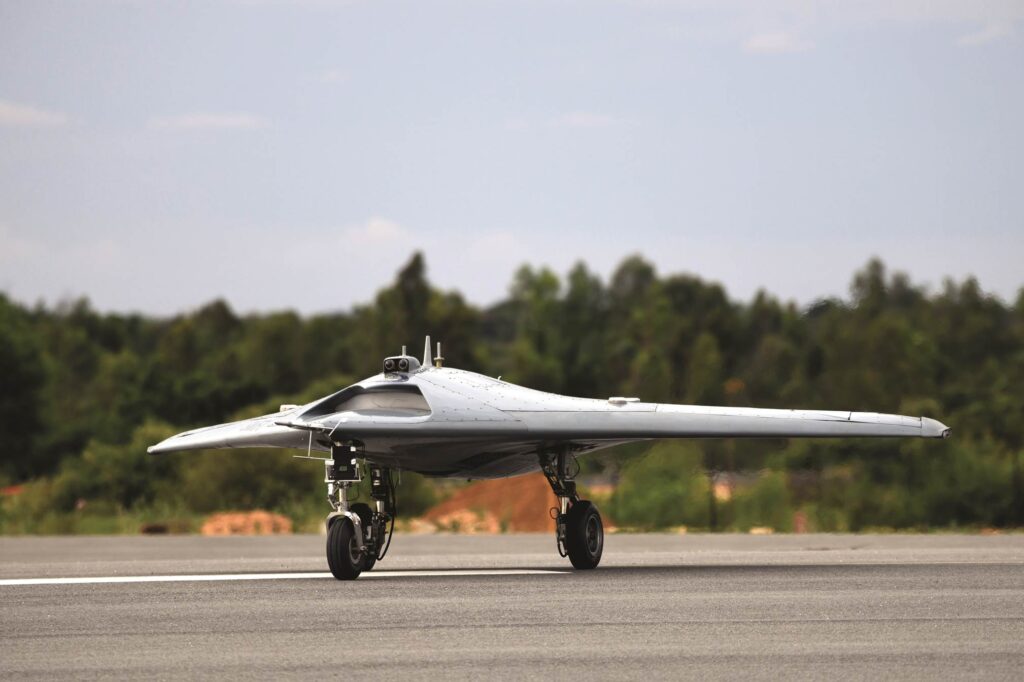
Introduction India’s defence ecosystem received a major boost in early March 2026 when the Defence Procurement Board (DPB) recommended that the proposal to procure 60 Ghatak Unmanned Combat Aerial Vehicles (UCAVs) — developed by DRDO’s Aeronautical Development Establishment (ADE) for the armed forces, primarily the Indian Air Force — be taken forward. This development, reported by Business Standard and The Week on March 4, 2026, now awaits final approval from the Defence Acquisition Council (DAC) and potentially the Cabinet Committee on Security (CCS).
The Ghatak is India’s indigenous stealth flying-wing UCAV, designed for deep penetration in contested airspace. What makes this program historic is its exclusive use of the indigenous Kaveri Derivative Engine (KDE) — the dry (non-afterburning) variant of the GTRE Kaveri turbofan — reviving a once-troubled engine project and achieving full propulsion self-reliance for a cutting-edge stealth platform.
What is the Ghatak UCAV? Ghatak is a jet-powered, autonomous stealth UCAV featuring a low-observable flying-wing design (no tail, blended body to minimize radar cross-section). Evolved from the AURA concept and proven via the SWiFT testbed, it is optimized for high-risk missions: deep strikes, suppression of enemy air defenses (SEAD), precision attacks on high-value targets, and intelligence/surveillance/reconnaissance (ISR) — all without endangering pilots.
The production-scale Ghatak is a ~13-ton platform (comparable in size to the Tejas LCA), incorporating serpentine air intakes (curved to hide engine blades from radar) and radar-absorbing materials.
Key projected specifications: Weight class: 13 tons
- Speed: High subsonic (Mach 0.8–0.9)
- Combat radius: 1,000–1,300 km
- Endurance: 6–8+ hours
- Altitude: Up to ~30,000 ft
- Payload: Internal weapons bay for missiles (e.g., Astra Mk3) and precision munitions (e.g., DRDO’s Smart Anti-Airfield Weapon — SAAW)
Advanced autonomy enables standalone operations or “loyal wingman” roles alongside manned fighters like Tejas Mk-II or the future AMCA.
The Pivotal Role of the Kaveri Derivative Engine (KDE) The KDE (dry Kaveri) produces ~49–52 kN thrust and is optimized for subsonic endurance, low heat signature, and fuel efficiency — perfectly suited to the Ghatak’s stealthy, persistent missions. By eliminating the afterburner (unlike the original Kaveri, which struggled with thrust for manned fighters), it reduces infrared detectability, enhancing survivability against heat-seeking threats. Key features include advanced single-crystal turbine blades, a high-temperature technology few countries have mastered.
Recent KDE milestones and path forward: First serial production unit (D1) delivered by Godrej Aerospace in 2025.
- Over 140 hours of ground and endurance testing completed.
- D2/D3 units planned for delivery and high-altitude flight trials (including on Il-76 testbed in Russia) in early-to-mid 2026.
- MoD has set a firm target of end-2026 for full certification (altitude validation, performance under varied conditions).
The government has ruled out foreign interim engines: Ghatak will fly with KDE from prototypes onward. This makes engine certification the decisive gating item for higher approvals, prototype rollout (late 2020s), first flight (anticipated ~2030–2031), and initial induction (~early 2030s).
Why Ghatak (Powered by KDE) is Crucial in Modern Warfare Modern conflicts demonstrate the dominance of stealthy, autonomous unmanned systems for penetrating A2/AD environments. Facing layered threats along the LAC (e.g., Chinese J-20 stealth fighters, advanced S-400 SAMs and radars), Ghatak delivers:
- Undetected deep penetration and strikes on radars, missile sites, and infrastructure.
- Zero pilot risk in high-threat missions, enhancing operational flexibility.
- Manned-Unmanned Teaming (MUM-T) to multiply force effectiveness.
- Strategic independence by eliminating foreign engine dependencies (a key lesson from Tejas).
- Stronger deterrence in two-front scenarios through long-range stealth air power.
The program also advances India’s Atmanirbhar ecosystem: building expertise in stealth materials, AI autonomy, advanced propulsion, and creating high-tech jobs.
Timeline and Outlook 2026: KDE full certification (critical enabler and prerequisite for further clearances).
- Late 2020s: Full-scale prototype rollout and integration.
- 2030–2031: Anticipated first flight and user trials (subject to engine certification and program progress).
- Early 2030s: Potential induction of initial batches.
With DPB backing and a clear indigenous propulsion commitment, momentum is building strongly.
The Mantras Take: The DPB’s recommendation to advance procurement of 60 Ghatak UCAVs — powered exclusively by the indigenous KDE — marks a landmark in India’s defence self-reliance. It transforms the Kaveri program’s past challenges into a strategic victory: complete indigenous propulsion for stealth combat platforms. As warfare shifts toward unmanned and stealth dominance, Ghatak ensures India can project power independently and effectively — a true embodiment of Atmanirbhar Bharat.
This isn’t merely about one drone or engine; it’s proof that India can master complex frontier technologies and convert them into decisive national security advantages.