
Lithium isn’t the only future for EVs. Why sodium-ion batteries are gaining momentum. Read More.
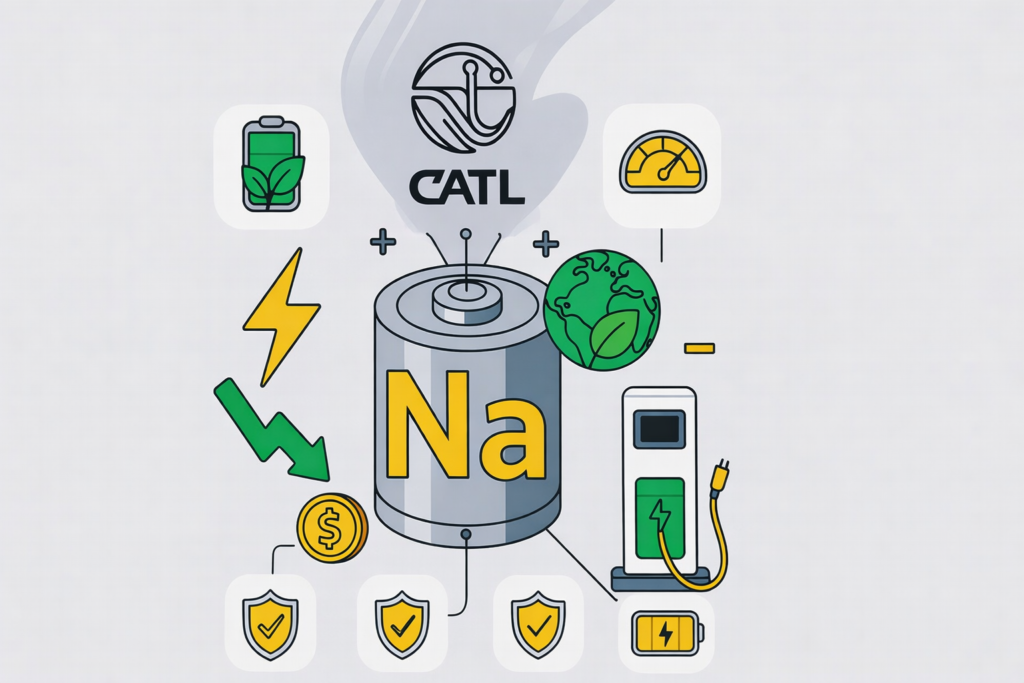
Sodium-ion batteries work in much the same way as lithium-ion batteries. Both store and release energy by moving ions between a cathode and an anode during charging and discharging. The key difference lies in the element used.
Instead of lithium — a relatively scarce and expensive metal — sodium-ion batteries rely on sodium, one of the most abundant elements on Earth. Sodium is widely available in oceans, soil, and industrial compounds, making it easier and less environmentally complex to source.
This shift in chemistry does not aim to replace lithium entirely. Rather, it introduces a complementary option suited to specific use cases.
Why Sodium-Ion Matters
Lower Costs
Sodium is significantly cheaper and more abundant than lithium. Over time, this could reduce battery costs, particularly for entry-level electric vehicles, public transport fleets, and stationary energy storage.
Strong Cold-Weather Performance
One of sodium-ion’s most important advantages is its stability in low temperatures. Unlike lithium-ion batteries, which can lose significant range in winter, sodium-ion cells maintain performance even in extreme cold.
Improved Safety
Sodium-ion batteries are less prone to thermal runaway, reducing the risk of fires. CATL’s sodium-ion cells are the first of their kind to meet China’s upcoming battery safety standards scheduled to take effect in 2026.
Environmental Benefits
By reducing dependence on lithium, cobalt, and nickel, sodium-ion batteries can lower the environmental and ethical costs associated with mining rare metals.
CATL’s Sodium-Ion Battery: What We Know So Far
CATL has disclosed several key performance indicators for its latest sodium-ion cells:
- Energy density: up to 175 Wh/kg, suitable for practical short- to mid-range electric vehicles
- Operational temperature range: –40°C to +70°C
- Cycle life: over 8,000 charge cycles
- Safety: certified under China’s next-generation battery safety regulations
While sodium-ion batteries currently offer lower energy density than high-end lithium-ion cells, they are well suited for urban vehicles, buses, delivery vans, and energy storage systems where reliability and cost matter more than maximum range.
Why This Matters to Consumers
For drivers in cold regions, sodium-ion technology could reduce winter range anxiety. For cost-sensitive buyers, it may help bring electric vehicles closer to mass affordability. For cities and logistics companies, it offers a safer, longer-lasting solution for fleets that operate year-round.
Rather than forcing a one-size-fits-all approach, CATL envisions a dual-chemistry future — lithium-ion batteries for long-range, premium vehicles, and sodium-ion batteries for everyday mobility and infrastructure.
The Mantra Take
Here’s the truth: technology only changes lives when it’s accessible. Lithium batteries started the EV revolution. Sodium‑ion batteries are the next chapter — not replacing lithium, but complementing it. They make electric driving practical for every generation, in every corner of the world.
CATL’s sodium‑ion battery is more than a new gadget — it’s a step toward energy freedom. EVs will soon be affordable, safe, and ready for everyone, not just the few who could afford them before. That’s the future hitting the road in 2026 — and it’s looking bright.
Really a great topic.. tqx for sharing your knowledge