
Alliances are no longer built on values. In the modern world order, money, trade, and power decide who stands together—and who walks away.
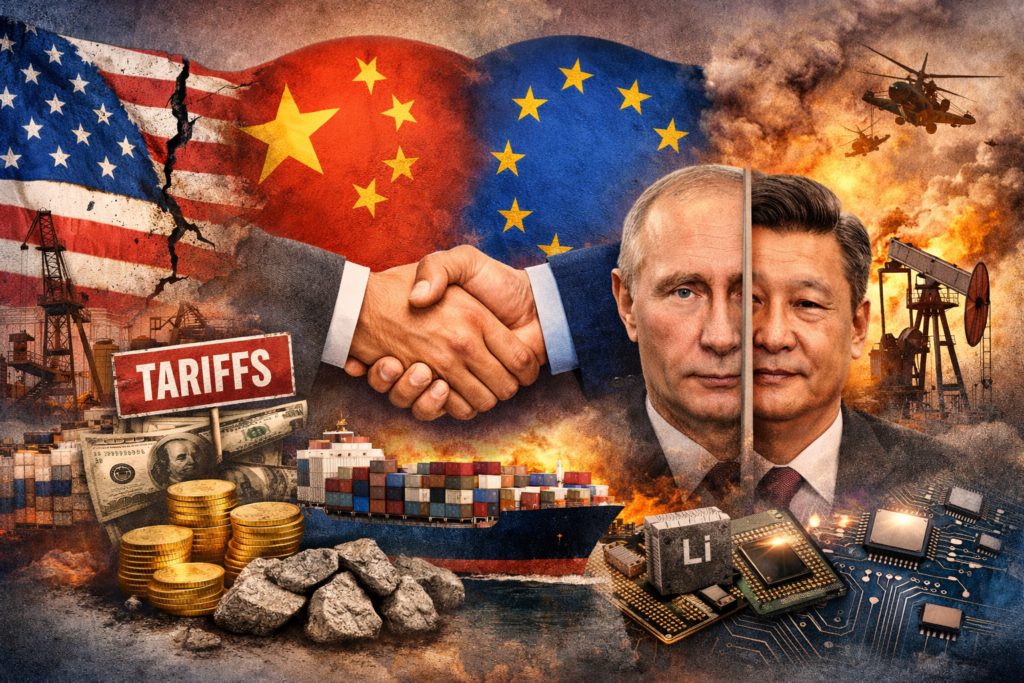
There was a time when global alliances were built on ideals. Democracy versus communism. Freedom versus authoritarianism. Right versus wrong. Nations stood together not just for profit, but for principles.
That world no longer exists.
Today’s global order runs on a far simpler question: “What’s in it for me?”
Money, markets, technology, and resources now matter more than shared values. Alliances may look solid on paper, but the moment economic interests are threatened, those bonds crack—sometimes overnight.
Welcome to the modern world order, where geopolitics feels less like diplomacy and more like a boardroom negotiation.
From Ideology to Economy: A Silent Shift
In the past, countries chose sides based on belief systems. Now, ideology has quietly taken a back seat. Governments no longer ask who shares their values—they ask who strengthens their economy.
Trade routes matter more than treaties. Supply chains matter more than speeches. Leaders calculate every alliance through one lens: economic security.
Recent events in 2025–2026 have made this painfully clear.
When the U.S. Looked Inward, the World Looked Elsewhere
Under Donald Trump’s return to power in 2025, the United States took a sharp inward turn. Tariffs hit even long-time allies like Canada and European nations. The message was blunt: protect American industry first.
The response was just as pragmatic.
Canada and Europe didn’t protest for long. Instead, they quietly diversified—strengthening trade among themselves and increasing economic engagement with China. Jobs, supply chains, and stability mattered more than loyalty.
Trust, once broken, is hard to rebuild. And in global politics, nations don’t wait—they adapt.
China’s Rise: Deals Without Lectures
As the U.S. stepped back from global commitments, China stepped forward.
In 2025, Beijing expanded its reach through trade agreements, infrastructure loans, and tech partnerships—especially across Africa and Asia. These deals came with an attractive promise: no lectures on democracy or human rights.
But make no mistake—this wasn’t charity. China’s focus was clear: control over strategic assets like rare earth minerals, technology pipelines, and energy routes. Growth today, leverage tomorrow.
For many developing nations, the choice was practical, not philosophical.
Russia and China: Partners, Not Friends
Moscow and Beijing often speak of a “no-limits” partnership. Reality tells a different story.
Russia, weakened by sanctions after the Ukraine war, increasingly depends on China for markets and money. China, in turn, benefits from discounted oil and geopolitical leverage. Joint military drills make headlines, but when allies like Iran or Venezuela needed real support, help was minimal.
This relationship is transactional—not emotional. Interests first, alliances second.
Wars, Withdrawals, and Cold Calculations
Conflicts across Ukraine, Sudan, and the Middle East reveal today’s harsh priorities. Big powers choose sides not out of moral duty, but strategic gain.
The U.S. cut funding to international health and aid programs to control domestic spending. Europe, shaken by American unpredictability, began accelerating plans for “strategic autonomy”—building independent defense and trade capabilities.
The lesson is clear: no nation wants to be left exposed when partners change their minds.
Business Feels the Shockwaves First
Corporations now operate in a world of constant geopolitical turbulence.
Tariffs disrupt mergers. Sanctions reshape markets. Supply chains fracture overnight. To survive, companies are “friend-shoring”—moving factories from China to India, Mexico, or Southeast Asia.
But even friends aren’t safe. Compete too well, and tariffs follow.
The real battlefield? Critical minerals, AI, semiconductors, and quantum technology.
This isn’t a Cold War of missiles—it’s a war of chips, data, and dominance.
The Global South Pushes Back
Many nations in the Global South are done playing by Western rules. BRICS is expanding. New forums are emerging. The demand is simple: fair trade, respect, and autonomy—not moral lectures.
As climate, security, and economic summits unfold in 2026, one question looms large:
Will these platforms deliver real cooperation—or just more speeches?
Until then, volatility remains the norm.
A Multipolar Reality
The United States no longer dominates alone. China is rising. Europe is recalibrating. India is balancing both sides with strategic precision.
In this multipolar world, alliances are tools, not vows. They form, dissolve, and reform based on changing interests.
As one strategist put it bluntly: geopolitics runs on interests, not morals.
The Mantras Take
In today’s world, loyalty is temporary, interests are permanent. Nations must stop romanticizing alliances and start reading the fine print. Economic security is the new national security. Flexibility beats ideology. Technology beats territory. And resilience beats rhetoric.
The countries—and companies—that survive this era will be those that diversify risks, question old assumptions, and act before the ground shifts beneath them. This is no longer a game of values; it is a game of strategy.
In the modern world order, there are no permanent friends—only permanent calculations.
Play smart, adapt fast, or be left behind.