
India’s manufacturing can boom with modern tech. Discover how factories are transforming and driving economic growth. Read more now.
Published on: 13/01/2026
Revitalizing India’s Manufacturing: How Modern Tech Can Power Economic Growth
India, the world’s fourth-largest economy in 2026, is a land of immense talent and resources. Yet, despite the country’s strengths, manufacturing has lagged far behind agriculture and services. While agriculture employs nearly 45% of the workforce, it contributes only about 15% to GDP, struggling with inefficiencies, small farms, and weather vulnerabilities. The services sector, from IT to finance, dominates with over 50% of GDP, driving urban employment and exports. Meanwhile, manufacturing lingers around 15–17%, far below global competitors like China (30%) and Vietnam. This imbalance limits job creation, slows balanced development, and leaves the economy exposed to global service sector fluctuations.
To meet India’s $10 trillion economy goal by 2035, the nation must transform manufacturing into a powerhouse, and the key lies in modern technology.
Why Manufacturing Has Lagged
Several hurdles hold India back: outdated infrastructure, complex regulations, high logistics costs (14% of GDP vs. 8% in developed nations), and a heavy reliance on labor-intensive methods. Many firms assemble products rather than innovate, especially in electronics and automobiles, relying on imported critical components. While global supply chain shifts post-COVID created opportunities, India captured only a fraction due to these technological gaps.
Technology as the Game-Changer
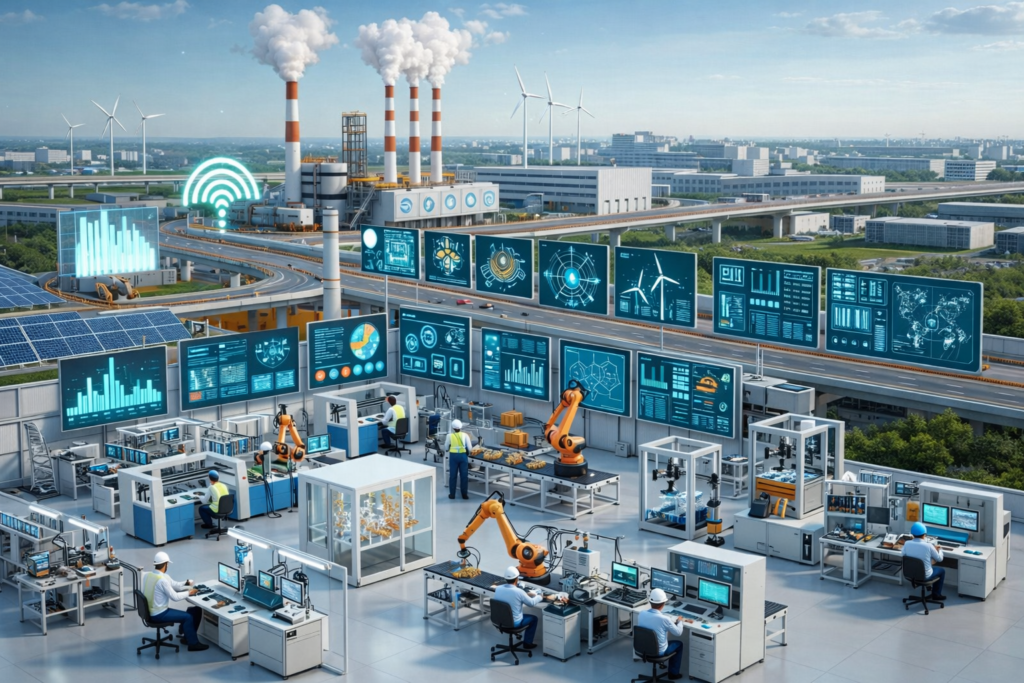
Industry 4.0 technologies—AI, IoT, robotics, big data—can revolutionize manufacturing:
- AI: Predictive maintenance can cut downtime by 30–50%, like Tata Steel’s quality control systems.
- IoT: Sensors monitor machines in real-time, optimize energy use, and streamline supply chains.
- Robotics: Already in use at Maruti Suzuki, robots boost precision, safety, and productivity.
- 3D Printing: Rapid prototyping and customized production in aerospace and healthcare reduce import dependency.
- Blockchain: Secures supply chains, ensuring traceability, crucial for pharmaceuticals.
- Advanced Materials: Nanotech can create stronger, more eco-friendly textiles and chemicals.
A Multi-Pronged Strategy for Transformation
- Policy Incentives: Expand the PLI scheme to reward AI, robotics, and other tech investments. Boost R&D spending to 2% of GDP, double current levels.
- Education & Skilling: Update vocational training programs under Skill India to include AI, robotics, and digital skills. Partner with tech giants like Microsoft and Siemens for mass upskilling.
- Infrastructure: Roll out 5G, develop smart factories, and improve logistics under the National Logistics Policy.
- Startups & SMEs: These account for 90% of manufacturing units. Funding, incubators, and mentorship can turn small firms into innovation leaders.
- Sustainability: Solar-powered automation, green tech adoption, and ESG-compliant manufacturing attract investment and support India’s net-zero 2070 goals.
The Mantras Take
India’s manufacturing renaissance is no longer a distant dream—it’s an urgent necessity. By embracing modern technology, fostering innovation, and equipping our workforce with futuristic skills, the nation can create millions of high-quality jobs, boost exports, and achieve inclusive economic growth. Policy reforms, private-sector investment, and sustainability must go hand in hand. The world is watching, and India has the chance to turn its challenges into opportunities, transforming from a services-heavy economy to a global manufacturing leader. The time to act is now—invest today, innovate tomorrow, and secure a prosperous future for generations to come.