
An Attack on One Ally Should Unite NATO—But What If the Aggressor Is America?
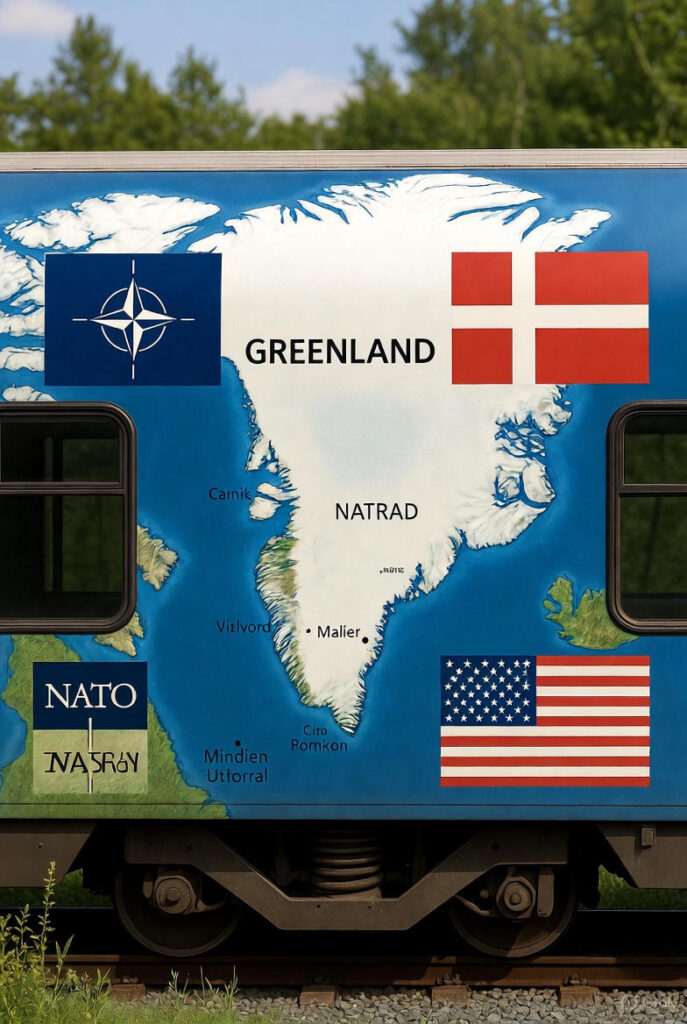
America’s Arctic Ambition: Why Trump Wants Greenland and the Peril to NATO:
As of January 2026, President Donald Trump’s renewed push to acquire Greenland—an autonomous Danish territory—has escalated into a major transatlantic crisis. The White House has confirmed discussions of “a range of options,” including military force, to secure the island, citing national security imperatives amid rising Arctic tensions with Russia and China. This rhetoric, intensified following U.S. actions elsewhere, has provoked sharp rebukes from Denmark and European allies, raising fears of irreparable damage to NATO.
Strategic Security and Geopolitical Stakes:
Greenland’s location in the Arctic makes it a linchpin for North American defense. It overlooks the GIUK Gap, a critical naval chokepoint, and hosts the U.S.-operated Pituffik Space Base for missile warning and space surveillance. Trump has emphasized deterring “Russian and Chinese ships all over the place,” arguing Denmark cannot adequately protect it. Melting ice is opening new shipping routes like the Northwest Passage, amplifying its value for global trade and military projection.
The Resource Dimension: Security or Economic Grab?
While Trump insists the drive is purely for “national security, not minerals,” Greenland’s vast untapped deposits tell another story. It holds significant rare earth elements—essential for EVs, batteries, wind turbines, and defense tech—along with lithium, graphite, and potential oil/gas. China dominates 70-90% of global rare earth supply, using it as leverage. U.S. control could secure supply chains and reduce dependency, with rare earth stocks surging on acquisition news. Analysts view the motives as intertwined: resources enhance military capabilities, while security justifies access. Unlike oil-focused interventions (e.g., Venezuela parallels drawn in rhetoric), this blends great-power Arctic competition with economic dominance—not a pure resource raid.
U.S. Options and Denmark’s Response:
The administration prefers diplomatic acquisition, such as purchase or enhanced partnerships, with Secretary of State Marco Rubio assuring lawmakers no invasion is planned. Alternatives include investments or a “freely associated state” model. However, White House statements keep military options open, alarming Copenhagen. Denmark rejects any sale outright, boosting its Arctic military with ships, drones, and personnel. Greenland’s leaders affirm sovereignty, open to cooperation but not annexation.
NATO on the Brink: Potential Catastrophic Impacts:
The gravest risk is to NATO itself. An attack on Greenland—Danish territory—would trigger Article 5’s collective defense, but with the aggressor as the alliance’s dominant member. Danish Prime Minister Mette Frederiksen warns it “would be the end of NATO” and post-WWII security order. European leaders (UK, France, Germany, etc.) issued joint statements backing sovereignty and collective Arctic defense.
– Alliance Paralysis and Dissolution: No feasible military response against U.S. power; consensus-based decisions could block formal invocation, but the breach erodes trust fundamentally.
– Eroded U.S. Credibility: Undermines Article 5 guarantees, accelerating European strategic autonomy and reduced reliance on America.
– Broader Fallout: Emboldens adversaries, isolates the U.S., and sends shock-waves through the alliance amid global uncertainties.
Experts deem outright invasion improbable due to catastrophic consequences, favoring coercion or negotiation.
This crisis tests NATO’s foundations at a pivotal moment. While security concerns are legitimate, aggressive pursuit risks alienating allies and destabilizing the Arctic. Diplomacy—through expanded bases or investments—remains the viable path, but rhetoric alone has already strained bonds.
Leave a Comment